
Having a tooth pulled, whether it’s a damaged molar or wisdom teeth, is a significant event for your body. While the procedure happens in our chair at Hillside Dental, the most important part of your recovery happens at home. We want your healing process to be as smooth and comfortable as possible.
Following these instructions carefully will help speed up your recovery and prevent complications like infection or dry socket. Here is everything you need to know about caring for your mouth after your surgery.
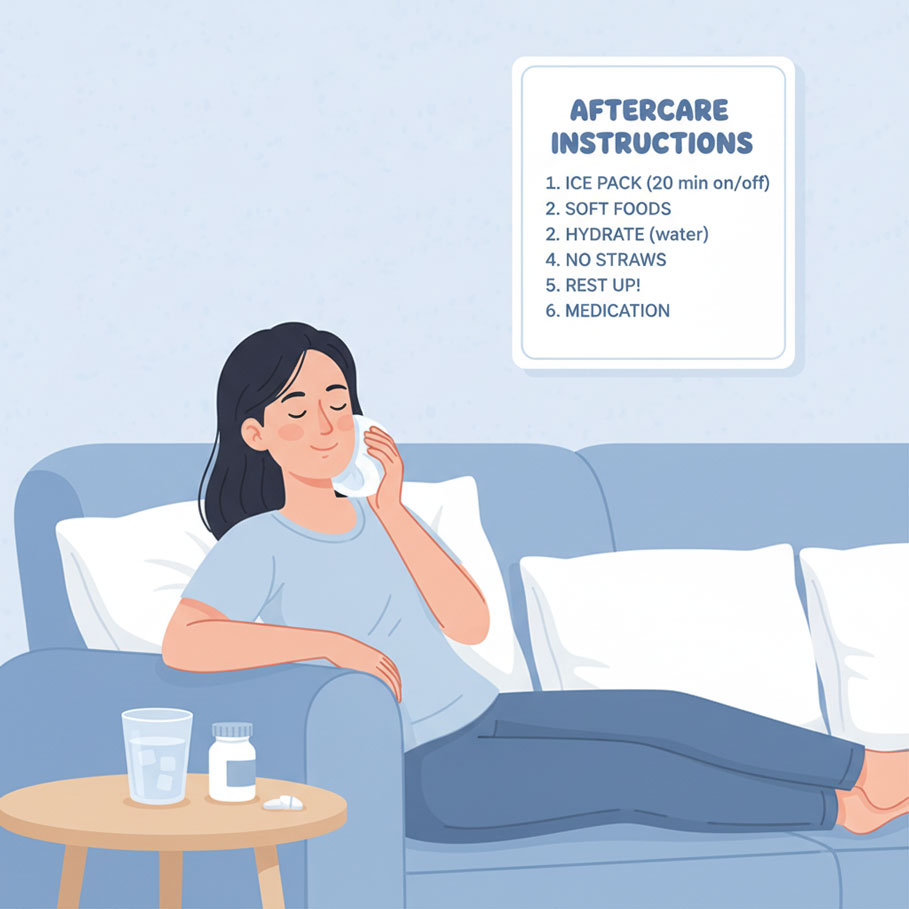
Immediate Care: The First 24 Hours
The first day is crucial for establishing a blood clot at the surgical site. This clot acts like a protective scab over a skinned knee—it covers the bone and nerve endings underneath.
Managing the Bleeding
When you leave our office, you will likely be biting on gauze. Keep biting on that gauze for 30 minutes. The pressure is what stops the bleeding. If bleeding persists after that first half-hour, replace the gauze with a fresh piece and continue to apply firm, consistent pressure.
It is much better to hold steady pressure for a longer period than to change the gauze every few minutes. Constant interruptions prevent the clot from forming.
Don’t be alarmed if you notice slight bleeding or oozing for the first day or two. This is normal. Pro tip: Cover your pillow with an old towel or use an old pillowcase tonight just in case you drool a little while sleeping.
Protecting the Clot
To ensure the clot stays in place, you must follow these strict rules for at least 24 hours:
- Avoid spitting. Let saliva drool out over the sink if necessary, but do not use force to spit.
- No rinsing or swishing. Vigorous movement of liquid can dislodge the clot.
- Absolutely no straws. The sucking motion creates a vacuum in your mouth that can pull the clot right out of the socket.
Managing Swelling
Swelling is a natural response to surgery. On the day of your procedure, you can use ice packs on the side of your face to keep inflammation down. Use the “20 minutes on, 20 minutes off” rule. Note that normal swelling usually peaks within 48 to 72 hours after surgery before it starts to subside.
Lifestyle Adjustments for Healing
Your body needs energy to heal. This means you need to take it easy for a few days.
Rest and Activity
Go directly home after your surgery. If possible, avoid taking stairs by yourself immediately after the appointment, as you might feel a bit lightheaded.
Do not engage in sports, aerobics, or heavy lifting for at least 3 days. Raising your heart rate too high can cause the extraction site to start bleeding again.
Tobacco and Alcohol
This is non-negotiable for a safe recovery.
- Do not smoke or use smokeless tobacco for at least 48 hours. The chemicals delay healing, and the sucking motion of smoking can cause dry socket, which is very painful.
- Do not consume alcohol for at least 48 hours. Alcohol thins your blood and can interact poorly with pain medications.
Diet: What to Eat (and What to Avoid)
Nutrition is important, but you need to be gentle with your mouth. We recommend a soft diet for the first 24 to 48 hours.
Great foods to eat:
- Mashed potatoes
- Scrambled eggs
- Yogurt and pudding
- Soup (warm, not scalding hot)
- Seedless smoothies and milkshakes (remember—eat these with a spoon, no straws!)
Foods to avoid for the first week:
- Straws (we can’t stress this enough)
- Popcorn, nuts, and chips (sharp pieces can get stuck in the socket)
- Fruits with small seeds (like strawberries or raspberries)
- Acidic foods like oranges or tomato sauce, which may sting
- Carbonated drinks
Make sure you drink plenty of fluids to stay hydrated, as this aids the healing process.
Medications and Pain Management
You may have been prescribed medication to help with pain or prevent infection.
- Take all medications exactly as directed. If we prescribed antibiotics, you must take them until they are gone, even if you feel better.
- Use caution. Do not drive or operate machinery if you are taking prescribed narcotic pain medication.
- Mouth Rinse. If we prescribed a mouth rinse, start using it 24 hours following surgery, not before.
When to Call Us
Most recoveries go smoothly, but it is important to watch for signs of complications. Call Hillside Dental immediately if you experience:
- A temperature greater than 101.5°F.
- Increasing pain or pain that does not get better with medication.
- Bleeding or swelling that seems excessive or beyond what we told you to expect.
We are partners in your health. If something doesn’t feel right, we want to know. Rest up, take it easy, and let your body do the work of healing. You’ll be back to your normal routine before you know it.